Every startup I talk to right now has a voice agent demo.
You know the one. The voice breathes between sentences. It laughs at the right moment. You cut it off mid-word on purpose and it goes, “oh, sorry, go ahead,” and actually listens. Some of them have a face now, blinking and nodding at you on a video call. The founder slides their phone across the table, you try to break it, it doesn’t break, and the whole room goes quiet like they just saw a ghost.
Then you go home and call your airline.
And within thirty seconds you’re right back where you’ve been your entire life. Account number. A list of options. “Let me transfer you.” Hold music that sounds like a dentist’s office in 2004.
That gap, between the demo and the call you actually get, is what this is about.
I’m building WorkMade, which handles the books, taxes and back office for founders. A big part of it is an agent you can just call. I’ve built that agent, broken it, watched people use it, and rebuilt it more times than I’d like to admit. Here’s the biggest thing I learned: almost nothing wrong with voice agents is a model problem. The models are incredible. What’s wrong is way older than AI, and you can trace every bit of it through a hundred and fifty years of machines learning to answer the phone.
So this is part rant about the industry, part history lesson, part playbook. Bookkeeping is my worked example, but if you’re building anything that talks to customers, steal all of it.
The barThe best phone call in business
It’s 4:40 on a Thursday. Payroll runs tomorrow. A customer is three weeks late. There’s an envelope from the IRS on your desk that you haven’t opened, because opening it makes it real.
You call your bookkeeper. She picks up on the second ring.
“Hey. Is this about the CP161? I saw it come in. It’s a $1,240 penalty, it’s fixable, and I already started the letter. Also, Acme paid this morning, so you’re fine for Friday.”
You haven’t said a word. She just answered three questions you were about to ask, and one you were too scared to.
You’ve had some version of this call. The travel agent who rebooked you before you knew the flight was cancelled. The doctor’s office that already has your new insurance. Same shape every time: they know why you’re calling, they already did something about it, and they leave you one decision.
That’s hospitality. It’s the oldest product there is, and every machine that ever picked up a phone has been trying to fake it.
The problemGreat parts, bad calls
Let’s be honest about how good the parts are now, because it makes the bad calls even less forgivable.
Voices are basically solved. ElevenLabs and Cartesia will sell you one that sounds like a person in dozens of languages, and the vendors now quote the first sound in about a tenth of a second. OpenAI’s GPT-Live and Google’s Gemini Live hear you and talk back with one model, and they can listen while they’re talking, like an actual human at a dinner party. LiveKit and Pipecat wire it all together. Vapi and Retell will hand you a phone number with an agent on it before lunch. Want a face? Tavus and HeyGen will stream one that makes eye contact.
Ten years ago, any one of those was a company. Now they’re line items. You rent the whole stack by the minute.
And yet. Almost every voice agent out in the wild falls into one of four traps:
The phone menu with a nicer voice. Built around the company’s org chart, not your problem. It sorts you into a department before it asks what’s wrong. Gorgeous voice. Same “press one for billing” energy.
The demo. Great first line, great personality, nothing behind it. Thirty amazing seconds, then you ask it something real and it can’t look anything up or change anything.
The goldfish. No memory. Every call starts from zero. “Can I get your account number?” “Can you explain the issue?” I did. On Tuesday. To you.
The receptionist. Polite, understands you perfectly, and the only two things it can actually do are send you a link or transfer you. Congrats, you just talked to a very expensive voicemail.
Swap in next year’s best model and every one of these would be exactly as annoying, just with better diction. They’re design problems. And every single one has been around for decades. We built all four traps before, with switchboards and buttons and machines in walls. Which is great news, actually, because it means the history tells us where the bugs came from.
1877Ahoy
The telephone was invented before anybody agreed on what to say into it.
Alexander Graham Bell, the man who literally invented it, wanted everyone to answer with “ahoy.” Like a sailor. Imagine your dentist picking up like they’re about to board your ship. Bell said it for the rest of his life. Respect the commitment.
Thomas Edison had a better idea. In August 1877 he wrote to a friend that the phone wouldn’t even need a bell, because “Hello!” could be heard from ten to twenty feet away. That was the pitch. Not warm. Not classy. Loud and fast.
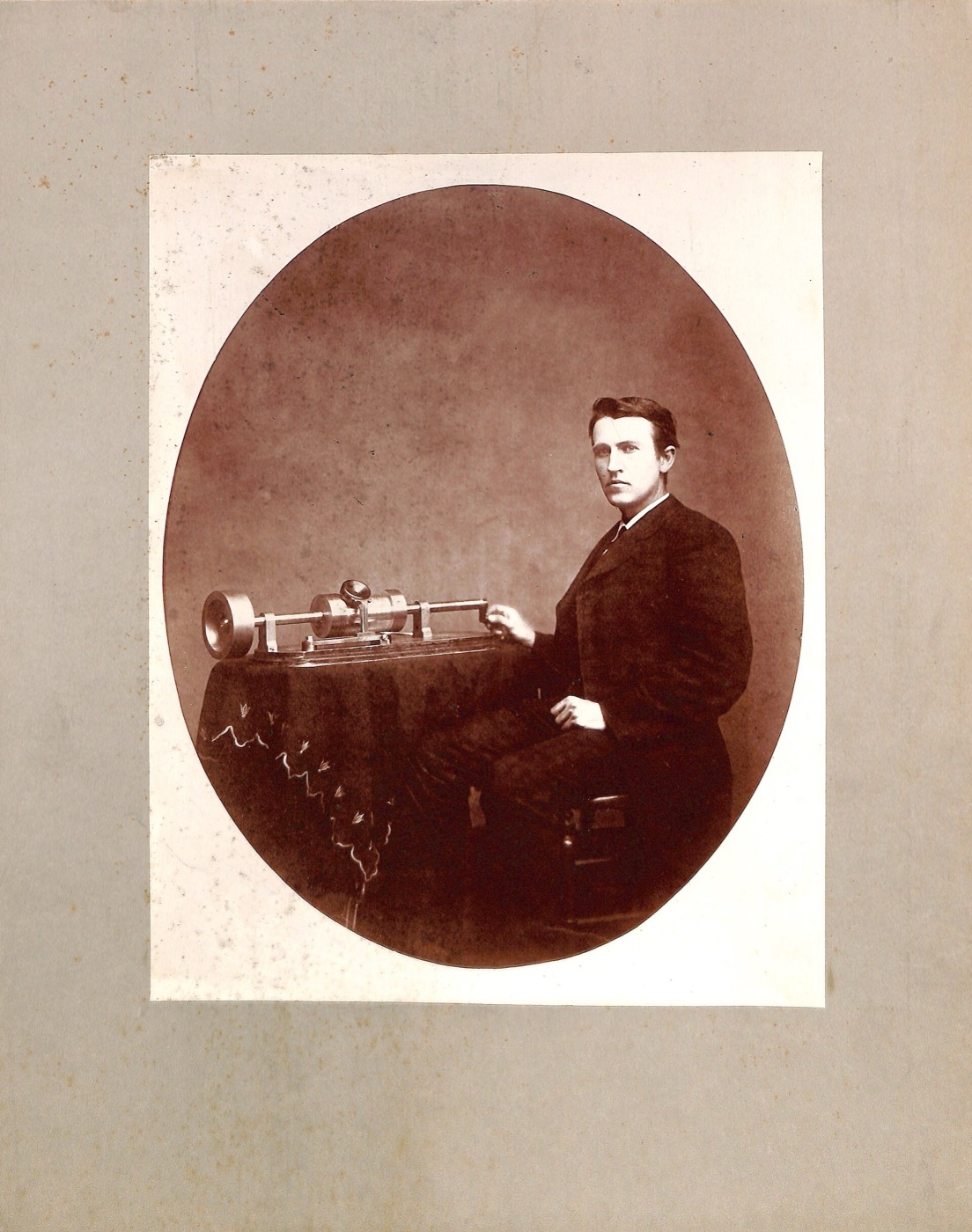
Edison won, and ahoy went back to sea. But notice what just happened: the very first design decision in the history of the phone call was about speed. Remember that. It’s about to matter a lot.
1878 to 1960sNumber, please
Early calls didn’t go anywhere on their own. You picked up, a woman at a switchboard said “Number, please,” grabbed a cord, and plugged you in. Thousands of them, in long rows, all day. In Florida, where I’m from, they worked for Southern Bell.
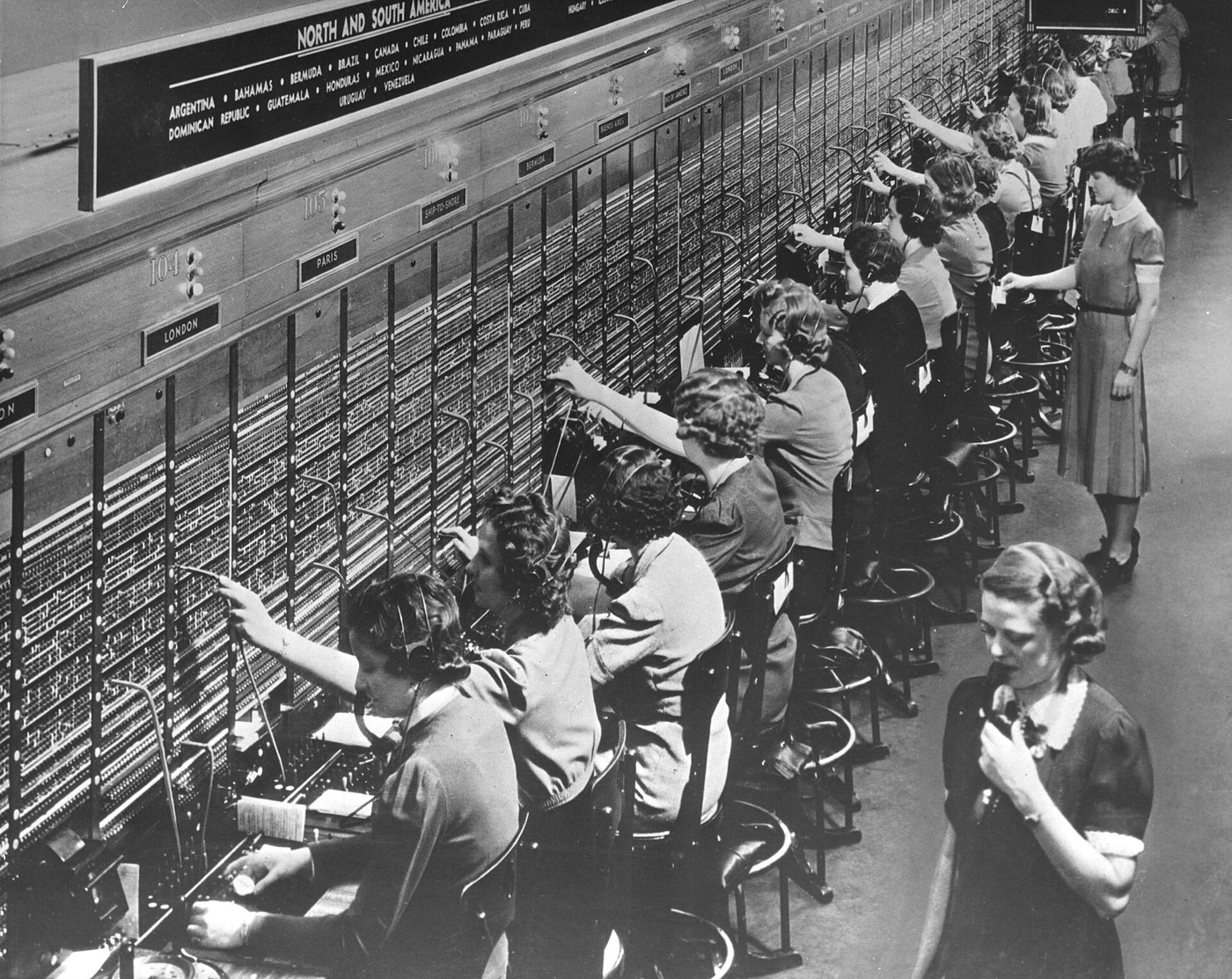
In a small town, the operator knew everybody. She knew the doctor was at the Hendersons’ tonight, so she put your call through there. She knew whose mom was sick. She was the original hospitality at scale: one person holding a whole town’s business in her head.
And that cuts both ways. Here’s the most famous story in phone history. In late-1880s Kansas City, an undertaker named Almon Strowger kept losing customers. The local operator, so the story goes, was married to a rival undertaker. When a grieving family called asking for “the undertaker,” guess whose line she plugged in.
Strowger was so mad he invented a switch that connected calls automatically, no operator required, and patented it in 1891.
Is every detail true? No idea. But it’s the perfect story for anyone building agents, because it’s the first time somebody looked at a person with context and decided the fix was to delete the person. He didn’t build a better operator. He built a machine with no memory and no loyalty, which also meant no favorites. You got exactly the number you dialed.
For the next hundred years, that was the deal: machines were fair, and they knew nothing about you. That’s the goldfish. It’s older than your grandparents.
1963Press one
In November 1963, the Bell System started selling Touch-Tone phones. Buttons instead of a dial. Each button sent its own tone, which meant a machine on the other end could hear what you pressed. Give that a couple of decades and you get the phone menu.

The phone menu might be the most honest software ever written, because it tells you exactly who it was built for. It’s the company’s org chart, read out loud, at the speed of a hostage video. Billing is one. Fraud is somewhere in four. If your problem touches both, congratulations, you get to do it twice. Press two to lose the will to live.
Nobody building those menus was evil. They had three thousand calls an hour and a few hundred people. The menu kept the company afloat. It just never once worked for you.
1974Hi, I’m Tillie
And then, plot twist: one machine got it almost exactly right.
On May 15, 1974, the First National Bank of Atlanta switched on eleven machines in its walls and gave them a name. Tillie the All-Time Teller. Cartoon face, big blue eyes, a little collar with her name on it, open all night. Card in, cash out.
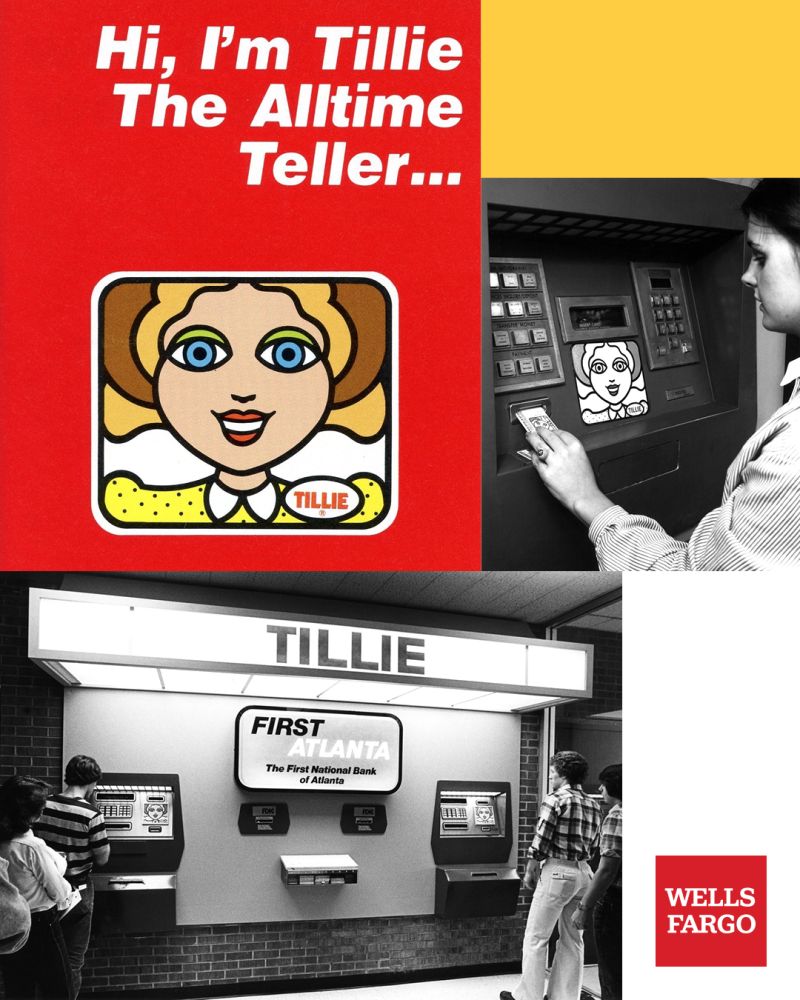

I’m a 90s baby, so I never got to meet Tillie, and honestly I’m a little hurt about it, because she is a whole vibe. The bank went all in. Her face was on your card. A real-life Tillie in a yellow polka-dot dress showed up and sang. Other banks licensed her and she spread across the South. At least one bank threw her a party. Somebody bought an ATM a birthday cake.
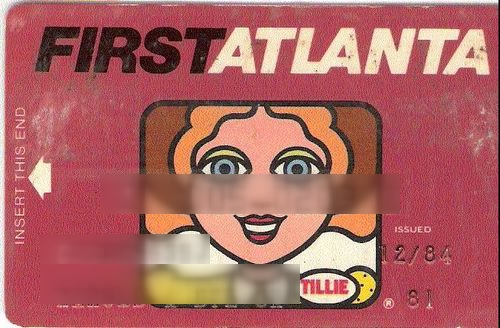
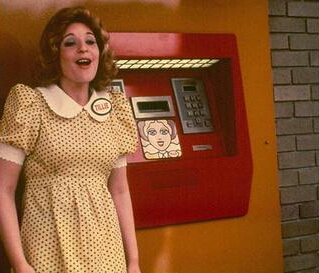
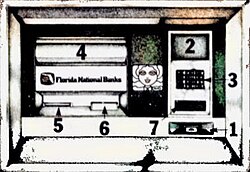
It’s easy to laugh at. I think it’s one of the smartest things a bank ever did, and it’s not the face.
Tillie was built around what you wanted, not what the bank wanted. You wanted money at 11 p.m., so she gave you money at 11 p.m. No routing. No “call back during business hours.” No form. The whole job, done, right there.
She was an agent fifty years before we called things agents. And the personality only worked because the usefulness came first. Nobody has ever baked a cake for a phone menu.
1984Hello, I am Macintosh
In January 1984, Steve Jobs pulled the first Macintosh out of a bag on a stage in Cupertino, and it talked. “Hello, I am Macintosh. It sure is great to get out of that bag.” The room lost its mind.
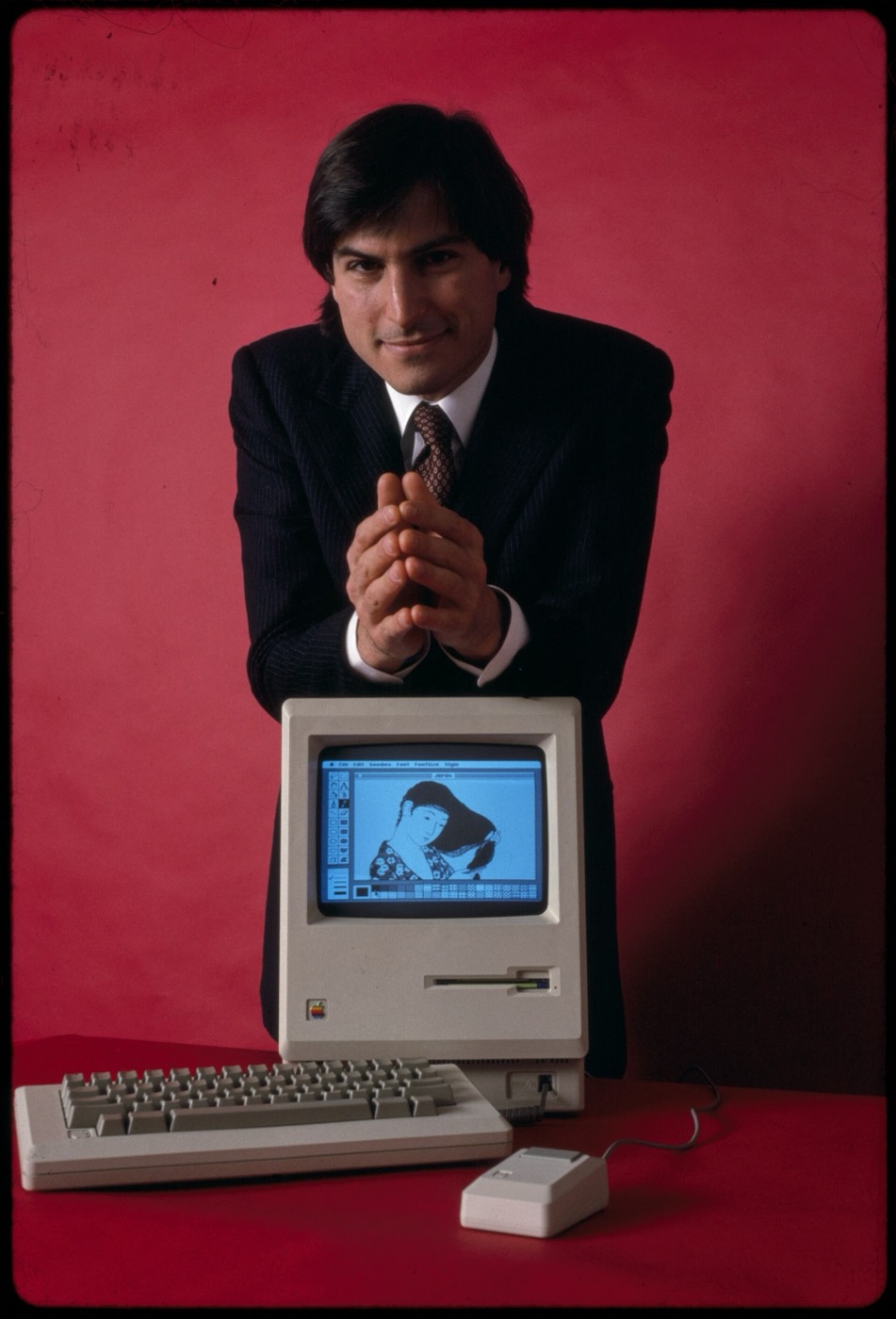
Brilliant theater. Also: it couldn’t do anything. It said one line somebody wrote for it, perfectly, once, to a room that wanted to love it.
That’s the demo trap, forty years early. A great voice and a great first line will always get applause. They just won’t pay your taxes.
NowWhat actually changed
So if all four traps are ancient, why is everybody suddenly talking about agents?
Not mainly because the models got smart, although they did. Because the wait went away.
Every chapter of this story has a wait in the middle. The operator hunting for the jack. The menu reading its options. Hold music. The database that had to connect. Robot voices reading you one flat word at a time like a ransom note. Every pause said the same thing: you’re talking to a machine, and it’s busy.
1877Edison picks “hello”
1963Push buttons
1974Tillie the teller
1984The Mac speaks
2026A voice that answers as fast as a person
People are freakishly fast at conversation. When researchers measured turn-taking across ten languages, from Japanese to Danish, they found the same thing everywhere: almost no overlap and almost no silence, usually well under half a second between turns. We’re planning our answer while the other person is still talking. Anything slower, and your brain quietly files the other side under “robot.”
Machines couldn’t come close for most of my life. Now they can. And there are basically three ways to build it:
- You speak
- Speech to text
- Language model
- Text to speech
- It answers
Easy to build and swap parts. Every arrow is a wait, and your tone of voice gets flattened into text along the way.
- You speak
- One model hears and talks
- It answers
Fast, hears how you said it, can listen while it talks. Harder to control, and not where you want careful math happening.
- You speak
- Fast voice up front
- Careful model and your tools behind it
- It answers
The voice keeps the conversation moving. A slower, more careful brain does anything that has to be right.
A diagram, not a benchmark.
Most of the industry started with the chain, because it’s easy. Speech-to-speech models are faster and hear your tone, but you’re asking one model to be charming and correct at the same time, live, which is a lot to ask of anyone. The setup that actually works is how good teams work: a quick, friendly voice up front that keeps things moving, and a slower, careful brain in the back, plugged into your real systems, for anything that has to be right. The receptionist says “one sec.” The accountant in the back does the math.
Here’s the part that should scare every company with a phone number: once a voice answers as fast as a person, the excuse is gone. For forty years, “the technology isn’t there yet” covered for a lot of bad design. It’s there now. Mostly, companies took this brand-new superpower, bolted it onto the same old phone menu, and called it AI. Half-assed experiences, shoved down the throats of customers who deserved better.
The playbookSeven rules from 150 years of phone calls
Here’s how I think agents should actually work. Every rule came out of building WorkMade, and every one was already hiding somewhere in that history. None of it is special to bookkeeping.
The quoted lines below are examples I wrote for this piece, not real customer calls.
Rule 1Edison’s rule: the first second is the product
One awkward pause after “hello” and you’ve clocked it’s a machine. Then you start talking to it like one. Slower. Louder. Like you’re on FaceTime with your uncle. Game over.
The secret nobody tells you: the voice is rarely the slow part anymore. The slow part is everything around it. Figuring out you’re done talking. Pulling up your records. Your own database, your own APIs, that one partner integration that takes three seconds on a good day. A genius model waiting on a slow lookup is still a slow call.
So measure from the moment the person stops talking to the moment they hear something useful, on real phone lines, not your laptop on office Wi-Fi. Load what you’ll probably need before the call starts. And when something truly takes a few seconds, say so, like a human: “One sec, pulling that up.” Silence is the only unforgivable answer.
Rule 2Tillie’s rule: be useful before you’re charming
Don’t start with the model or the voice. Start with the script. Write the best possible version of the call, line by line, the way you’d sketch a screen. Then read it out loud, alone, like a weirdo. If a line would annoy you coming from a person, it’ll be ten times worse coming from software.
Most agents blow it on line one. They’re friendly before they’re useful.
Instead of“Thanks for calling! I’m your AI assistant. How can I help you today?”
Say“Hi Maya. Your 6:10 to Denver was just cancelled. I can put you on the 7:45 with an aisle seat. Want it?”
The second one already did the work and leaves you one decision. That’s the bookkeeper. That’s Tillie handing you cash. And yes, people should always know they’re talking to an AI. That’s one honest sentence, not a whole personality.
Rule 3The operator’s rule: remember people, and say so
The operator was great because she knew everybody. Strowger’s switch was fair because it knew nobody. For a century we had to pick. An agent can finally have both. But memory needs rules, or it gets creepy and wrong, fast.
Facts aren’t maybes. “We hired her” is a fact. “What if we hired her?” is a thought. Save the thought as a fact and the next call starts from something that never happened.
Memory stays in its lane. Personal account, business account, two companies: what you learn in one never leaks into another. Recognizing a phone number is enough to say hi. It’s not enough to open somebody’s account.
Say what you remember. Out loud. It tells people they don’t have to start over, and lets them correct you in one breath.
Instead of“Before we begin, can I get your account number?”
Say“Is this about Tuesday’s invoice, or something new?”
Rule 4The menu, backwards: let people be messy
The phone menu was built for a tidy caller who knows which department they need. That person does not exist.
Real people correct themselves mid-sentence. “8:30. Pacific. Actually, Eastern.” Written down, unhinged. Out loud, just Tuesday. A good agent says “8:30 Eastern” and keeps it moving. The newest turn detection listens to what you’re saying, not just whether you’ve gone quiet, so it can tell “and, um...” from “that’s it.” Use it. If I start talking, stop. If I go quiet, I’m thinking, not gone.
And I am begging you: do not read me a list. By option three I’ve forgotten option one.
Instead of“I have openings Tuesday at 9:15, Tuesday at 2:30, Wednesday at 10, and Thursday at 11:45. Which works?”
Say“Mornings or afternoons?”
The menu made people sort themselves for the company. The agent should do the sorting for the person.
Rule 5Tillie’s other rule: finish the job on the call
Tillie didn’t hand you a slip and say come back tomorrow. You left with the cash.
The second a call ends with “I’ll send you a link,” congrats, you just gave me homework. That’s the difference between an assistant and an agent: an agent can actually do the thing. Real tools, wired into real systems, with clear limits on what it can do without asking. The fast voice talks; the careful brain does the work and confirms it happened. The voice never announces a result it hasn’t seen.
Finishing also means the scary stuff: Social Security numbers, card numbers, dates of birth. Taking those safely by voice is hard, which is exactly why most teams skip it and send a link. Find the moment your call hands someone a chore, and kill it first.
And if there’s a screen, it matches the words. Your accountant would turn her laptop around and point at July. If the voice says “July,” you’d better be looking at July.
Rule 6Strowger’s rule, finished: never say “let me transfer you”
Strowger built a switch so nobody could route you to the wrong place. A century later, companies built entire departments whose whole job is routing you to the next place.
You call about a weird charge. Billing can see it but can’t touch it. “Let me get you over to the fraud team.” Hold music. New stranger. Whole story, again, from the top. Every team knows its corner, and you’re the one hauling the story between them.
One agent can know every team’s work at once. Nobody to transfer you to. No reason to.
Instead of“Let me get you over to the fraud team.”
Say“I see the charge. I’ve disputed it, and a new card gets to you Thursday.”
- 1The menu
- 2On hold
- 3Billing can see it, can’t fix it
- 4Transferred
- 5The fraud team
- 6You tell it all again
- 7“We’ll call you back”
A drawing of the shape of each call. It is not measured data.
Shorter call, sure. The real win is nobody made you explain yourself twice.
Building a multi-agent system? One warning: don’t rebuild your org chart in software. A “billing agent” handing off to a “fraud agent” is just the phone menu running faster. Specialists in the back are fine. The customer only ever meets one.
Rule 7Measure the call, not the model
Every model launch comes with a leaderboard. None of them measure what your customer cares about.
So measure calls. Time from “hello” to done. How many times somebody repeated themselves. How often a call ended in a link, a callback or a transfer instead of the actual thing. Then listen to real recordings, with permission, every week. Ten bad calls will teach you more than any benchmark.
And keep one test above all the others: would you save the number? People save their bookkeeper’s. Nobody saves their bank’s.
The worked exampleWhy we started with bookkeeping
Not because it’s glamorous. Because it’s the hardest test of everything above. The numbers have to be exactly right. The information is as sensitive as it gets. The deadlines come with penalties. And nobody calls about their books when things are going great. If an agent can be a good host here, it can be a good host anywhere.
Go back to our bookkeeper. She has about thirty clients. She knows you’re nervous about June. She knows Acme always pays late and always swears the check is in the mail. She knows you’d rather wait on your first hire than dip under a year of runway. If your mom passed in March, she knows that too, and she didn’t call that week.
She’s answering four questions every time she picks up: What do you need? How can I help? How do I get it done? How do I do a little better than you expected? Restaurants run on that. Hotels run on that. It’s why you drive past two barbers to get to yours. I’ve started calling it hospitality as a service, mostly to annoy people who name things “as a service.”
Now hand her three thousand clients.
She can’t. Nobody can. So the firm does exactly what the phone company did in 1891: it deletes the memory. Teams, scripts, menus, and “Can I get your account number?” from someone who’s never heard of you. We’ve lived with that trade so long it feels like physics. Service that knows you, or service at scale. Pick one.
I don’t think that’s true anymore. An agent has the time. It doesn’t get tired at 4:40 on a Thursday. It can hold three thousand situations the way she holds thirty. That’s hospitality at scale. Here’s how we’re building it.
Our approachHow WorkMade answers the phone
One agent, one thread. Call it, text it, tap it: it’s the same WorkMade and the same conversation, tied to you and your books. Specialists work behind it. You only ever meet one.
Hello is ready before you call. The greeting is prepared before you hit Call, in the same voice as everything after it. No gap, no weird double hello. Edison would be proud.
A fast voice and a careful brain. A full-duplex voice model keeps the conversation natural. A separate, more careful model handles anything that touches your actual numbers, and the voice only tells you what that model has confirmed.
It checks before it opens your books. Lots of founders keep personal and company money with us. Knowing your number gets you a hello. Opening a company’s books takes proof you belong to that company.
Habits, not transactions. When we set up your books, we don’t read you your bank statement.
Instead of“I see a charge for $41.18 on March 3rd. Was that for work? And $27.50 on March 5th?”
Say“How often do you eat out for work?”
The screen matches the words. When it says July, July is on your screen.
The call goes where you go. Start on your laptop, walk out the door, pick it up on your phone. Same call.
It calls only when it needs you. Most of the work happens without a call. When your phone rings, there’s one decision only you can make.
What we haven’t cracked. When the agent has to dig through your books mid-call, the answer can still take a couple of seconds, which on the phone feels like a week. We’re on it. Meanwhile, it does the human thing and tells you it’s looking.
Thursday, 4:40 p.m.Hello, again
Back to that Thursday. Payroll’s tomorrow. IRS envelope on the desk. You call, and before you finish saying hi: “Is this about the CP161? It’s a $1,240 penalty, it’s fixable, and I’ve already started the letter. Acme paid this morning, so Friday’s covered.”
That’s the call we’re building. It’s the small-town operator’s call, Tillie’s call, your best bookkeeper’s call, except now it can happen for three thousand people, or three million, at 4:40 on a Thursday or 2 a.m. on a Sunday.
And it’s not just our call. It’s your airline’s, your doctor’s, your bank’s, and probably your startup’s. The parts are on the shelf. The voices are good enough. The wait is gone. What’s left is the oldest job in the phone business: knowing who’s on the line, and taking care of them.
Edison picked “hello” because it carried across a room. A hundred and fifty years later, the thing on the other end can finally know who it’s saying it to.
Build the one people save. Y’all got this.
Photographs: Thomas Edison with his tin-foil phonograph, 1878 (National Park Service); Bell System switchboard operators (U.S. National Archives); phone booths at 30th Street Station, April 1974, by Jim Pickerell (U.S. National Archives); Steve Jobs with the Macintosh, January 1984, by Bernard Gotfryd (Library of Congress). These are in the public domain. Tillie images: Wells Fargo Corporate Archives; a frame from a television ad for American State Bank; a First Atlanta bank card; a Florida National Banks diagram, 1979; and a promotional photo of a live Tillie. Tillie the Alltime Teller belongs to her owners; she appears here because this piece is about her.
Sources: Edison’s 1877 letter (Hagley Museum and Library); Tillie the All-Time Teller (Computer History Museum; Wells Fargo History); Stivers et al., “Universals and cultural variation in turn-taking in conversation,” PNAS, 2009. Voice and video products are named as examples of what’s available in late 2026, not endorsements; speed figures are the vendors’ own.